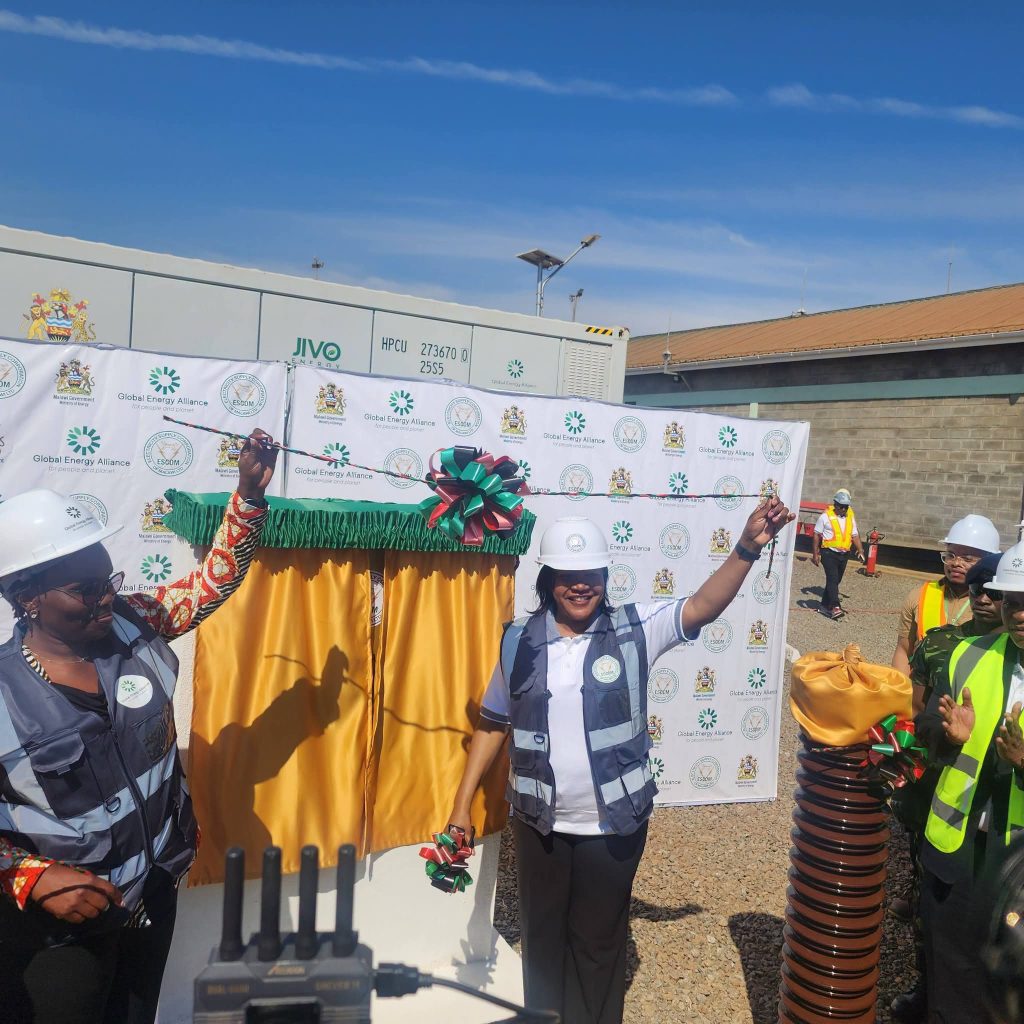
 Hon. Dr. Jean Mathanga, MP, Minister of Energy (R) and Carol Koech, Vice President for Africa at the Global Energy Alliance for People and Planet (L) unveiling the Battery Storage System.
Malawi has taken a significant step towards building a more resilient, reliable and sustainable electricity sector with the official commissioning of the country’s first standalone utility-scale Battery Energy Storage System (BESS) at Kanengo in Lilongwe. The 20MW/40MWh facility is the largest Battery Energy Storage System in Southern Africa and marks a major milestone in the Government’s commitment to modernising the national electricity network and accelerating the country’s clean energy transition.
The project, implemented by the Electricity Supply Corporation of Malawi (ESCOM) under the leadership of the Ministry of Energy and in partnership with the Global Energy Alliance for People and Planet (GEAPP), represents a strategic investment in Malawi’s energy future. It directly supports the aspirations of Malawi 2063 and the National Energy Compact, which aims to increase electricity access to 70 percent by 2030 while improving the reliability and quality of electricity supply.
Speaking during the commissioning ceremony, the Minister of Energy, Hon. Dr. Jean Mathanga, MP, described the project as the beginning of a new chapter in Malawi’s journey towards energy sovereignty and effective energy demand management.
“For decades, we have been at the mercy of the clock and the weather, but today we begin an era of energy independence on our own terms. We are not just commissioning a facility of steel and lithium; we are commissioning the engine of our development,” the Minister said.
The Minister emphasized that reliable electricity remains the foundation for industrialisation and economic transformation, noting that the Battery Energy Storage System will improve grid stability, enhance power quality, support greater integration of renewable energy, and reduce dependence on costly diesel-powered generation. By storing electricity during periods of lower demand and releasing it during peak hours, the facility will ensure a more stable and resilient electricity supply for households, businesses, hospitals, schools and other essential services.
Highlighting the strategic importance of battery storage, the Minister remarked:
“Solar power may have sparked our energy revolution, but Battery Energy Storage Systems will sustain it.”
The commissioning of the BESS also demonstrates Malawi’s growing leadership in adopting innovative energy technologies. Beyond strengthening the national grid, the project positions the country as a regional pioneer in battery energy storage while creating an enabling environment for future investments in renewable energy infrastructure.
Speaking at the same event, Carol Koech, Vice President for Africa at the Global Energy Alliance for People and Planet, commended the Government of Malawi for its leadership and commitment to expanding access to reliable and affordable electricity.
She noted that Malawi’s National Energy Compact aligns with the continental Mission 300 initiative, whose goal is to connect 300 million Africans to electricity by 2030. According to Koech, Malawi is demonstrating the kind of leadership needed to achieve that ambition.
“This project is not just infrastructure; it is a signal of what the future of energy in Africa can look like. And today’s commissioning is proof that it is being delivered,” she said.
She further observed that reliable electricity extends beyond powering homes.
“Reliable power is not just about electricity. It is about jobs, functioning hospitals, and businesses that can grow. This project shows what is possible when governments lead, and partners come together to take risk, unlock capital, and deliver.”
GEAPP also reaffirmed its long-term commitment to Malawi’s energy sector by announcing continued collaboration with ESCOM to modernise the country’s electricity network through digital transformation, enhanced grid planning and capacity building. The Alliance further announced the establishment of the Southern Africa BESS Centre of Excellence at Mzuzu University, positioning Malawi as a regional hub for research, training and technical expertise in battery energy storage technologies.
The Battery Energy Storage System forms part of broader Government efforts to strengthen energy security, reduce load shedding and create a more reliable electricity system capable of supporting economic growth, industrial development and improved livelihoods. The project also demonstrates the value of strong collaboration between Government, development partners and the private sector in delivering transformative infrastructure that responds to the country’s development priorities.
As Malawi continues implementing its National Energy Compact and Malawi 2063, the commissioning of the Battery Energy Storage System stands as a clear demonstration that the country is translating ambitious policies into tangible investments that will power industries, create opportunities, attract investment and improve the quality of life for millions of Malawians.
With the successful commissioning of the BESS, Malawi has not only strengthened its national electricity grid but has also positioned itself among Africa’s emerging leaders in clean energy innovation, setting a benchmark for resilient and sustainable power systems across the region.
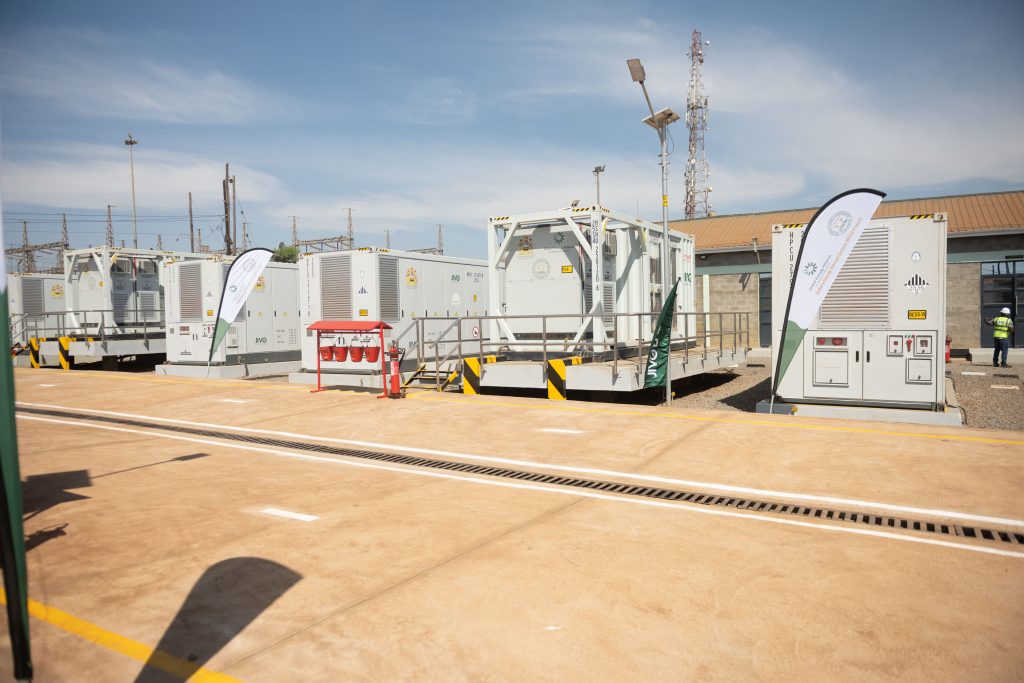 The Unveiled Battery Storage System.